




- Global Collaboration Center
- Activity
- Report on the Bhutan Seminar Series 2025 (Oct. & Nov.2025)
ページの本文です。
Report on the Bhutan Seminar Series 2025 (Oct. & Nov.2025)
2025年11月28日更新
Beginning in FY2021, the Global Collaboration Center is hosting regional research-based seminars to (1) learn about the Kingdom of Bhutan, which is located in South Asia, and (2) examine development policies and the situation of the country and region in light of these issues. Each seminar includes a film screening, a brief commentary by the presenter, and a question-and-answer session. A total of 15 sessions are scheduled for FY2025.
8th Seminar in the Bhutan Seminar Series 2025 (2025.10.3)
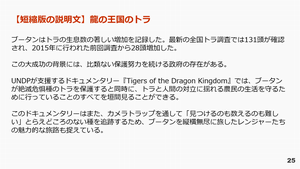
The 8th Bhutan Seminar of the 2025 academic year took place online on Friday, October 3, 2025. The 8th session (68th overall) featured the film Tigers of the Dragon Kingdom, which was produced jointly by the Government of Bhutan and the Bhutan Office of the United Nations Development Programme (UNDP). According to the latest survey, there are 131 wild tigers in Bhutan. The film revealed the challenges of coexisting with tigers. Before viewing the film, participants reviewed the previous seminar. Following the screening, Mr. Takahashi offered insights into Bhutan's natural environment and the relationship between humans and animals.
About 45 people attended this seminar. Here are some of the participants’ comments: “It was good to learn about the rangers' activities to protect tigers from poaching.” “The film packed the perspectives of various people involved with tigers (farmers affected by wildlife damage, poachers, forest rangers, and forest officers) into 30 minutes, making it fascinating. The joyful expression of the female ranger who spotted the tiger at the end was particularly memorable.” “While conservation is essential since tigers are on the Red List, considering the backdrop of youth migrating to cities, I realized we face difficult challenges in balancing the habitats of tigers, cattle, people, and other wildlife—including geopolitical factors with neighboring countries.”
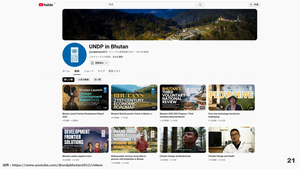
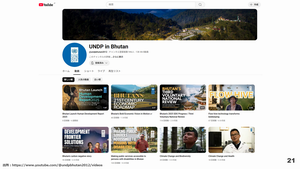 UNDP Bhutan Office YouTube channel
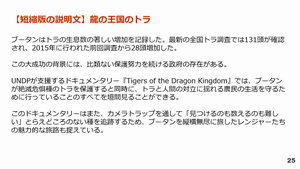 Summary of the featured video
9th Seminar in the Bhutan Seminar Series 2025 (2025.10.17)
The 9th Bhutan Seminar of the 2025 academic year took place online on Friday, October 17, 2025. The 9th session (69th overall) featured Bhutan's democratization and electoral landscape. Bhutan transitioned from an absolute monarchy to a constitutional monarchy in 2008 and has held elections every five years since. The commentary segment examined in detail the transition process, the electoral system, and the results of previous National Assembly elections. Participants raised questions regarding the political influence of Buddhist figures, the language used in Parliament, the neutrality of election coverage by the media, corruption, and the reality of the east-west disparity.
About 40 people attended this seminar. Here are some of the participants’ comments: “I gained a clear understanding of Bhutan's National Assembly composition and the content of each political party.” “It was interesting that the documentary was produced by the country's people and organizations with elections and democracy as its core themes. While I may not have fully grasped everything, the fact that such an objective documentary could be made suggests democracy is taking root, even if introduced by the King.”“I was surprised to learn that support for political parties is quite clearly divided between eastern and western Bhutan.” “It was a fresh surprise to learn that, just like in Japan, Bhutan also utilizes social media in election campaigns and that this can become an issue.”
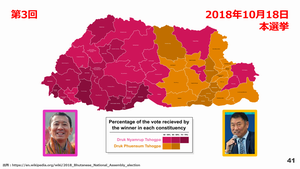 Third National Assembly Election Results (2018)
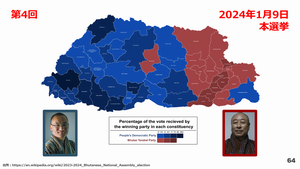 Fourth National Assembly Election Results (2024)
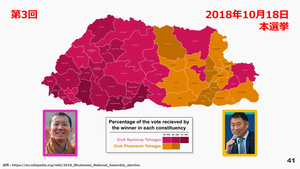
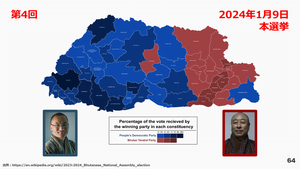
10th Seminar in the Bhutan Seminar Series 2025 (2025.11.7)
The 10th seminar of FY2025 took place on Friday 7th November. The 10th session (70th overall) focused on Bhutan's Civil Society Organizations (CSOs, equivalent to Japanese NPOs). During the seminar, participants reviewed the Civil Society Organizations Act enacted in June 2007 and the Civil Society Organizations Authority, which oversees CSOs domestically. They also overviewed the founding years, purposes, and initiatives of the 23 organizations introduced in the video presentation. From this, they examined Bhutan's social challenges (where administrative services are insufficient).
About 45 people attended this seminar. Here are some of the participants’ comments: “I gained a general understanding of Bhutan's NPOs.” “The CSO Authority's explanation and supplementary information on current registered organizations during the comment session were valuable.” “I agree with the point about the Royal Family's social contribution activities and their relationship with civil society organizations. As you noted, organizations like the Tarayana Foundation, YDF, and RENEW have substantial financial and networking power and have become representative entities in Bhutan.”“Congratulations on running your 70th seminar overall. Hearing this is the 210th study session is simply astonishing. We also greatly appreciate the materials being sent out in advance. While this seminar is billed as ‘for beginners’ and an‘introduction to Bhutan,’ what's truly wonderful is how thoroughly you answer even the most basic questions (like how to get from Japan to Bhutan). We look forward to the remaining sessions this year.”
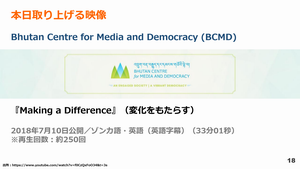 Introduction to the featured video
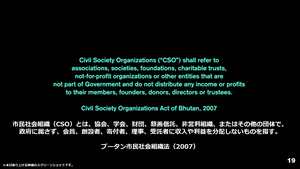 Definition of Bhutan's Civil Society Organizations (CSOs)
11th Seminar in the Bhutan Seminar Series 2025 (2025.11.21)
The 11th seminar of FY2025 took place on Friday 21st November. The 11th session (71st overall) focused on entrepreneurship and fostering an entrepreneurial spirit. The session featured a video highlighting nine entrepreneurs (eight teams) supported by the Loden Foundation, a Bhutanese civil society organization.
About 40 people attended the seminar. Here are some comments from the participants: “Entrepreneurship in Bhutan was an interesting topic.” “I gained insight into why the number of entrepreneurs is growing.” “I learned about the new initiative to start a business, as well as the educational programs now being offered at the youth center.”“Entrepreneurship is not just about making money. It can also be a way to support one's family and change one's life.”
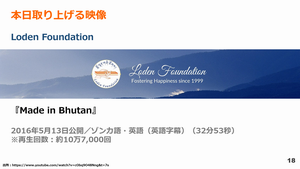 Introduction to the featured video
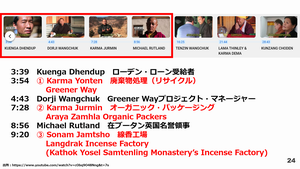 List of characters



〒112-8610 東京都文京区大塚2-1-1
責任者:お茶の水女子大学グローバル協力センターHP運営委員会
E-mail:info-cwed@cc.ocha.ac.jp

Copyright © OCHANOMIZU UNIVERSITY. All rights reserved.