




- Global Collaboration Center
- Activity
- Activity Report: Breast Care Training Models Made by Students of the Five Women's University Consortium Were Put to Use
ページの本文です。
Activity Report: Breast Care Training Models Made by Students of the Five Women's University Consortium Were Put to Use
2026年7月15日更新
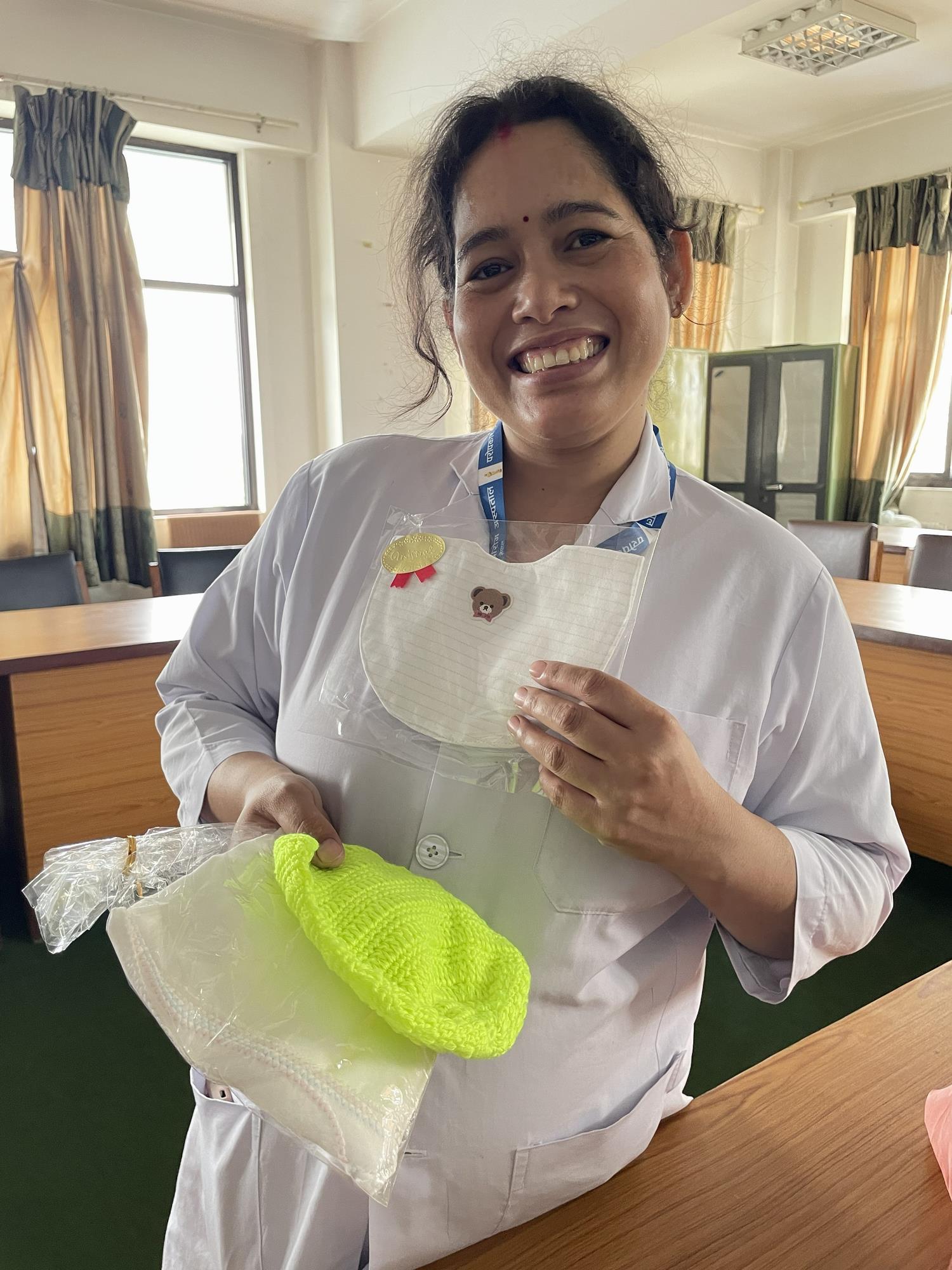
Handmade bibs for newborns made by students
From September 1 to 3, 2025, the Consortium of Five Women’s Universities (Ochanomizu University, Tsuda University, Tokyo Woman’s Christian University, Nara Women’s University, and Japan Women’s University) conducted a joint domestic study tour in Komagane City, Nagano Prefecture. A total of 15 students participated, with three students from each university.
The tour offered opportunities to learn about international cooperation and multicultural coexistence from multiple perspectives. Students explored topics such as the coexistence of local and foreign residents in Komagane City, citizen-level international exchanges with Pokhara, Nepal (Komagane’s sister city), and international cooperation initiatives led by JICA.
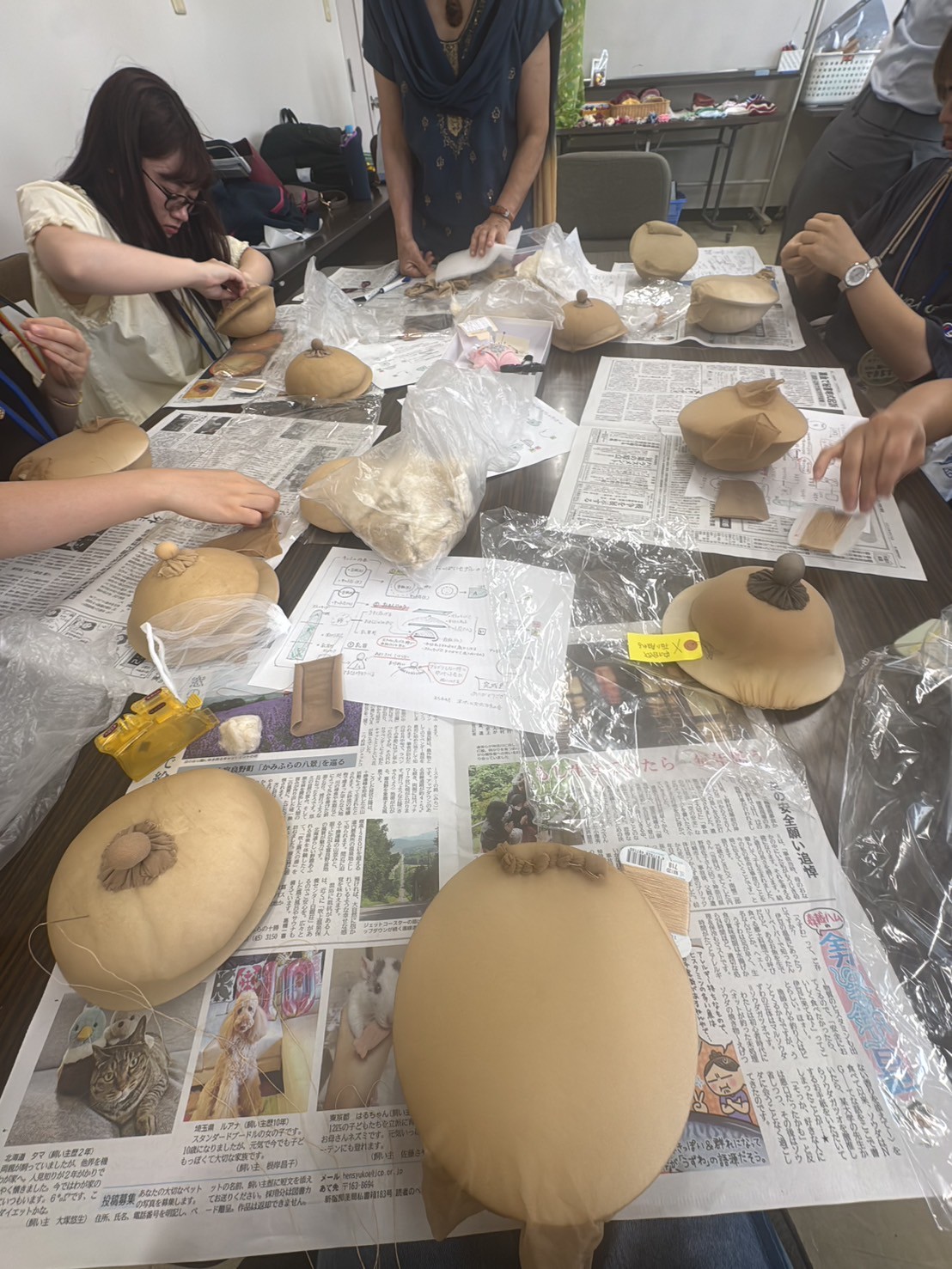
One of the sites visited was the Citizen’s Association for Nepal Exchange, which supports maternal and child healthcare in Nepal by producing and distributing maternal and child health handbooks and providing breastfeeding training. During the visit, students crafted “breast care training models,” tools used in breastfeeding instruction. Prior to the tour, some students also made bibs for newborns to be delivered to the site.
In June 2026, Ms. Kitahara from the Citizen’s Association for Nepal Exchange and Ms. Kawate, an experienced midwife specializing in breast care, visited Paropakar Hospital in Kathmandu and Pokhara, the project’s target location, to provide breastfeeding support through breast care training.
According to Ms. Kitahara, Paropakar Hospital handles 80 to 100 births per day. In such a hectic environment—where mothers, infants, families, and medical staff are all intermingled—it is not uncommon for patients to receive less-than-thorough care. She expressed deep respect for the resilience of mothers and infants living under these challenging circumstances. She also reported that the “breast care training models” and bibs made by the students were distributed by hospital staff and used during training sessions and care procedures. These items, crafted with heartfelt care and consideration, were very well received.
Through this study tour, students learned that international cooperation is not limited to large national projects. Small efforts—such as creating breast care training models or handmade bibs—can also make a meaningful difference. While modest in scale, these contributions can accumulate and lead to broader international cooperation.
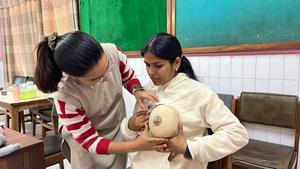
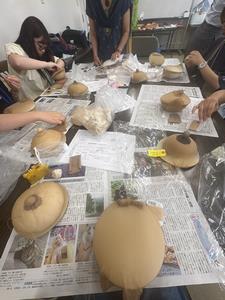 Students making “breast care training models”
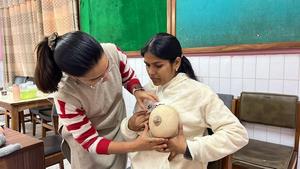 A scene from the breast care training for
breastfeeding support using “breast care training models”



〒112-8610 東京都文京区大塚2-1-1
責任者:お茶の水女子大学グローバル協力センターHP運営委員会
E-mail:info-cwed@cc.ocha.ac.jp

Copyright © OCHANOMIZU UNIVERSITY. All rights reserved.