




- Global Collaboration Center
- Activity
- Report on a Kurdish cookery and a screening of the film "My Small Land"
ページの本文です。
Report on a Kurdish cookery and a screening of the film "My Small Land"
2026年7月17日更新
On 1 and 2 July 2026, a Kurdish cookery and a screening of the film "My Small Land" were held. Students from various departments and fields of study gathered on both days, demonstrating a diverse range of interests.
Prior to the cooking on the first day, the students who initiated the event gave a presentation on the Kurds, touching on their history and current situation. The presentation also covered the experiences of Kurds living in Japan, offering insights into their culture and background.
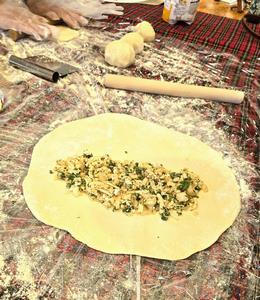
Cooking Katmaja penir
Afterwards, participants cooked a traditional Kurdish dish together. This time, they made 'katmaja penir', a Kurdish pizza with a cheese filling. The original recipe uses goat's cheese, but we used cottage cheese instead. Katmaja penir is a popular breakfast dish.
We also made 'şorbe nişkan', a red lentil soup, using 'salça', a tomato-based condiment said to be an essential ingredient in Kurdish cuisine. Salça is similar to Japanese miso in that it has a deep flavour. Another feature of Kurdish cuisine is the generous use of fresh herbs. This time, we added dried mint to give the soup a refreshing, summery flavour.
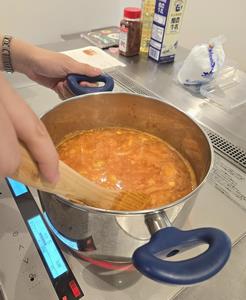
Cooking 'şorbe nişkan'
We cooked to the sound of Kurdish music, surrounded by the aroma of spices rising from the pot. It was easy to forget that we were on the campus of Ochanomizu University, immersed in music and the scent of spices.
Kurdish cuisine is diverse and flavorful, using ingredients such as lamb, chicken, vegetables, and fruit. It is said that the culture of this country is rooted in the importance of family and friends coming together over food. Working together to prepare the food and sharing a meal gave participants the opportunity to experience Kurdish culinary culture and the connection that food creates between people.
On the second day, we watched the film "My Small Land", which depicts the reality of the Kurds — known as the world's largest stateless ethnic group — through the eyes of a 17-year-old girl. It is estimated that there is a Kurdish community of around 2,000 people in Saitama Prefecture, yet very few Kurds have been recognized as refugees in Japan. The situation surrounding the Immigration Control and Refugee Recognition Act has become increasingly difficult since the project began in 2017.
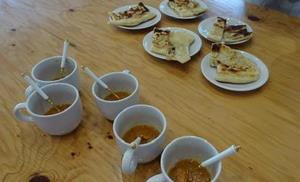
Kurdish cuisine we've cooked
Participants watched the film while eating the soup and pizza they had made the previous day. Many participants were captivated by the story of a family whose daily life changes dramatically when their application for refugee status is rejected and they lose their residence permit.
The film features scenes of the protagonists eating, and the food on their table was reminiscent of the dishes we had prepared the previous day. We felt that food is a great way to reflect on the lives of people who often seem far away from us and to connect with them.
This event provided an opportunity to consider the history and culture of the Kurdish people, as well as the issues surrounding the status of refugees and immigrants in Japanese society, through cooking, eating, and watching films together. We would like to continue creating opportunities where students can learn and discuss together.
(Member of the 'Living Together' Study Group ('Kurdish Cuisine Workshop' event organisers))



〒112-8610 東京都文京区大塚2-1-1
責任者:お茶の水女子大学グローバル協力センターHP運営委員会
E-mail:info-cwed@cc.ocha.ac.jp

Copyright © OCHANOMIZU UNIVERSITY. All rights reserved.