



- Summer Program
- Report on the FY2026 Summer Program
ページの本文です。
Report on the FY2026 Summer Program
2026年10月1日更新
(日本語での記載はこちら)
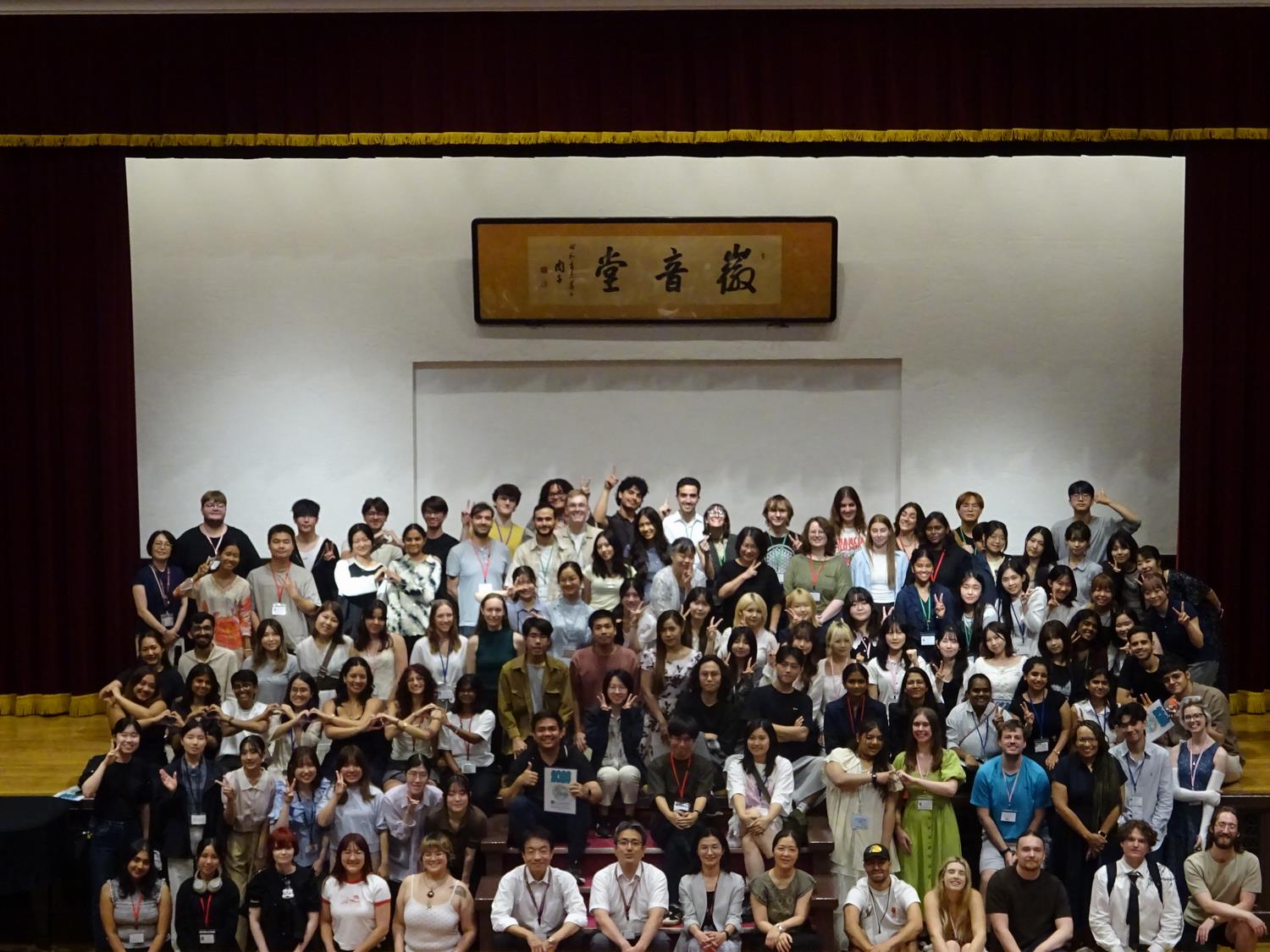
Following the impact of COVID-19, the Summer Program was held online from 2020 to 2022. In 2023, we resumed in-person activities.
In 2026, as in previous years, we continued to leverage the experience gained from the online Summer Programs. For the Project Work Course, students from our partner universities abroad and our university collaborated on projects. Online seminars were held before their arrival (July 6–16), allowing students to start group work in advance. After arriving in Japan, they engaged in in-person classes and group work.
For students learning Japanese in the Japanese Language Course were offered online buddy activities with Japanese conversation partners from July 6 until their arrival in Japan.
Classes for the Japanese Language Course and the Subject Based Course in English started on July 22.
A total of 273 participants joined the program: 100 international students (from 22 partner universities in 15 countries and regions), 32 students from our university, 14 students from the affiliated high school, 52 students from the affiliated junior high school, and 75 members of the Summer Program Student Committee.
In the Japanese Language Course, students gave final presentations on the final day of the program, August 5.
The Subject Based Course featured intensive lectures in three sub-courses:
・Current Issues in Japanese Culture and Society under Globalization
・Five Elements of Natural Science
・Exploring and Creating Fulfilling and Healthy Human Life in Modern Society
In the Project Work Course, multinational teams provided opportunities to learn together about Japanese society, international issues, and the leadership skills needed to address them.
As part of the Project Work Course, an online special lecture titled “Global Issues and Leadership in the Age of AI: From Technology to Human Values” was delivered by Professor Ana Maria Lara Palma of the University of Burgos, in collaboration with EDI program. The lecture highlighted the importance of communication, critical thinking, empathy, teamwork, adaptability, and intercultural understanding in leading diverse teams and collaborating across disciplines and national borders in the age of AI. It also explored the leadership needed to harness AI to build a more inclusive and sustainable society.
Another special lecture, titled “When Japanese were Migrants: Insights to the Contemporary Japanese Society,” was delivered by Professor Mariko Iijima, Vice President for Global Academic Affairs at Sophia University. Through exploring the history of Japanese migrants, participants deepened their understanding of the roles and challenges of migration in society, as well as multicultural coexistence in contemporary Japanese society.
In addition, through General Education and Special Cultural Events, participants learned about Japanese culture. These included a “Kyogen Workshop,” a “Kodo Experience,” and a joint event with Ochanomizu University Junior High School on the theme of “Hachiryokyo,” which featured a Japanese traditional sweets-making activity. Through these activities, participants deepened their understanding of Japanese culture.
The Summer Program Student Committee, a volunteer organization of our university's students, organized and managed the opening ceremony, campus tours, welcome party, club activity experience (calligraphy), origami-making, “Tokyo Omotenashi Tour,” stamp rally, closing ceremony, and farewell party. They also provided airport pick-up, produced program booklets and daily life support guides, and conducted online buddy activities before arrival.
With the leadership of students, particularly those with previous experience on the Student Committee, these events were planned and managed throughout the program. The activities fostered lively international exchanges between international students and students from our university, and the program concluded successfully with positive feedback from participants.
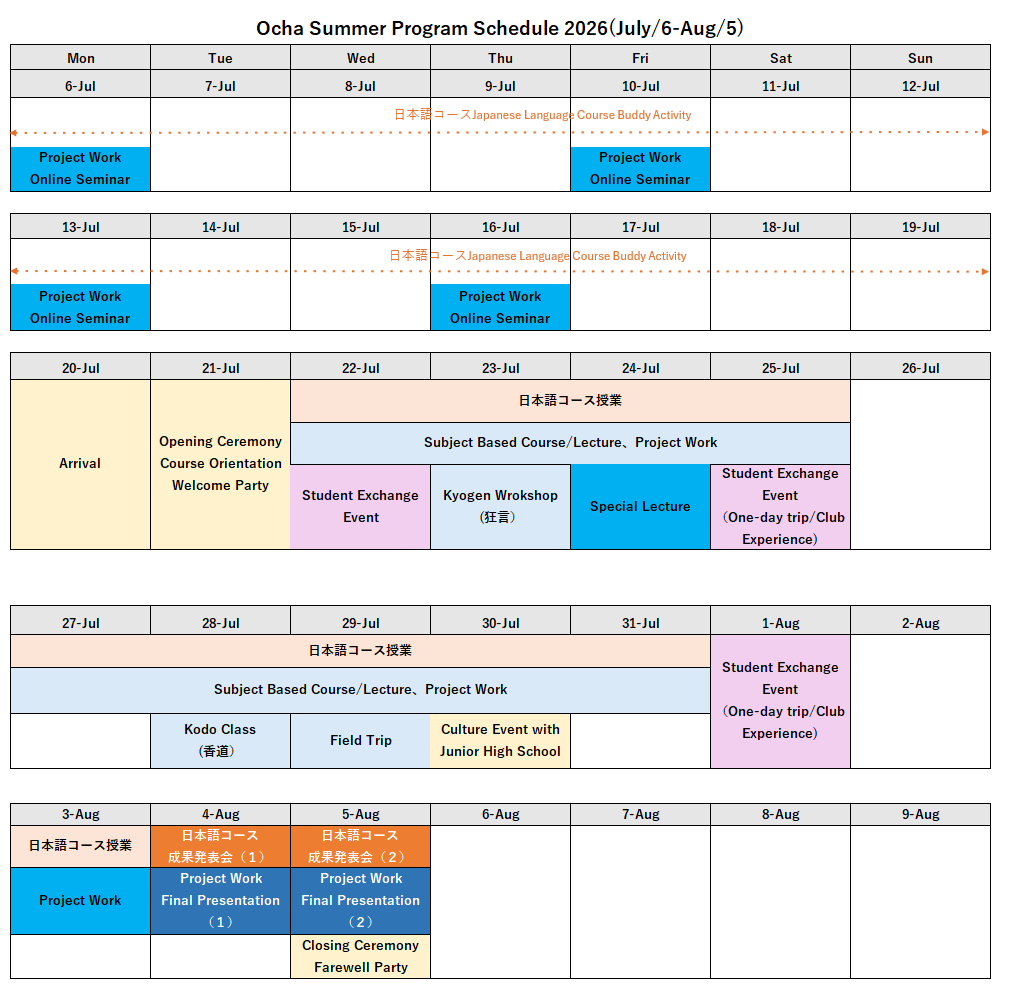
【Orange】Japanese Language Course (14th year): Open exclusively to students from our partner universities abroad.
【Blue】Subject Based Course (16th year) and Project Work Course: Students from our partner universities abroad participated in both courses, while students from our university participated in either or both Subject Based Course and Project Work Course. Students from the affiliated high school attended the Subject Based Course as auditors.






〒112-8610 東京都文京区大塚2-1-1
責任者:
E-mail:info@cc.ocha.ac.jp

Copyright © OCHANOMIZU UNIVERSITY. All rights reserved.